To understand how regenerative therapy works, we need to consider why our bones and joints become damaged and degrade
Common Causes of Joint Damage
The most common cause is osteoarthritis (OA), a “wear-and-tear” disease in which the cartilage cushioning the ends of bones gradually breaks down. This results in bone grinding against bone, which is painful and can cause stiffening and spoil mobility. OA may occur in older adults, although it also occurs in younger people because of:
Sports Injuries
A meniscus or ligament tear may have caused your joint damage to progress at a faster rate
Obesity
Being overweight puts enormous strain on weight-bearing joints such as the knees and hips, and fat tissue produces proteins that can lead to inflammation as well
Genetic
There are people who are more vulnerable to developing OA due to genetic factors
The Problem of Why Bones Can’t Do It Themselves
As miraculous as our bodies are in healing themselves, there are some body tissues that have little or no capacity to recover. The slick tissue covering joints known as cartilage, for example, has little blood supply. Deprived of blood flow, the disk is starved of nutrients and cells that are vital to help repair itself after being damaged or worn away.
That is the reason joint damage is usually progressive and treatments like steroid or hyaluronic acid injections are effective only in the short term
Stem Cell Regenerative Therapy and How it Works on Bones & Joints
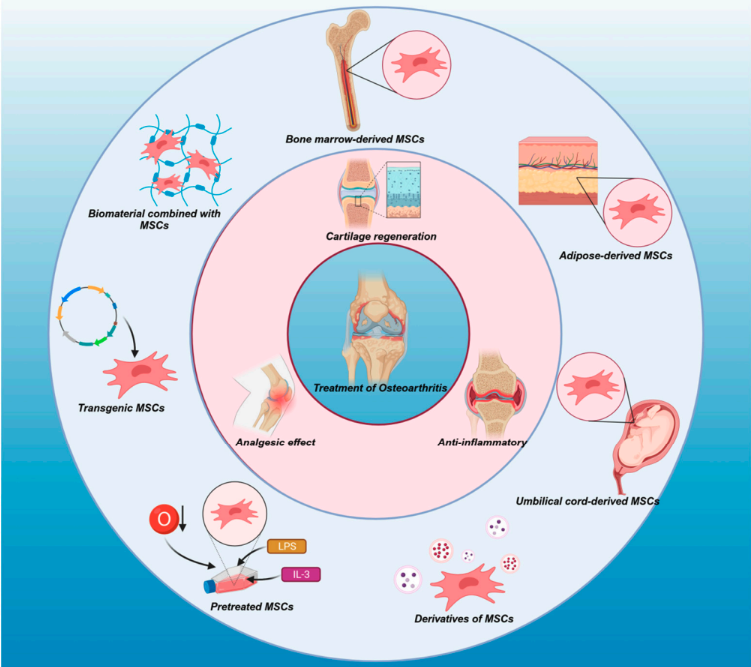
Bone and Joint Stem Cell Therapy does not work like magic as a treatment but is a biological process that assists the body to heal itself.
Mesenchymal Stem Cells (MSCs) are the principal actors in this phenomenon.
MSCs and Their Function
Critical to both homing and function of MSCs have been identified to be C-X-C motif receptor 4 (CXCR4) and its ligand stromal-derived factor 1 (SDF1).
MSCs are adult stem cells that can be derived from a number of different tissues, such as bone marrow and adipose (fat) tissue.
Unlike other cells, MSCs are multipotent, which means they can develop into many types of cells, such as those in cartilage, bone, and fat. It is their differentiation potential that makes them particularly interesting in orthopedic applications

Paracrine Effects
It is not only their capacity to differentiate that matters. MSCs are also endowed with a strong “paracrine” effect.
These act like “mini-pharmacies” and they spill rich bioactive molecules. These molecules that are defined growth factors or cytokines play a multitude of roles:
- Anti-Inflammation: MSCs are capable of modulating the immune system as well as decreasing inflammation where there was injury or degeneration, a major contributor to joint pain
- Activation of Endogenous Cells: The growth factors secreted by MSCs act by stimulating the host cells to repair and regenerate the injured tissue
- Driving Angiogenesis: They can stimulate the formation of new blood vessels, a critical factor in delivering oxygen and nutrients to areas that have suffered damage and generally have poor blood flow
By treating both inflammation and the absence of cellular support, this regenerative stem cell therapy works to establish a healthier setting for the body’s natural healing process to take place.
Benefits of Stem Cell Treatment for Joint Pain
Here are three benefits that individuals treated with stem cells for joint problems typically share.
Natural Healing Without Surgery
One of the biggest benefits is the ability to stave off or postpone the need for invasive surgery such as replacement surgery. It is a minimally invasive treatment, with only an injection of cells being needed to be administered directly to the pain site, providing patients who do not want to be subjected to surgery with a desirable healing option with no risks and long rehabilitation times
Pain Relief and Improved Mobility
Previous studies have indicated the advantages of the stem cell treatment, which reportedly brought about such advantages as a marked decrease in joint pain and the level of functional mobility.
Many patients experience little-to-no swelling or stiffness and are able to return to their daily routine immediately after treatment
Supporting Long-Term Joint Health
Unlike short-term pain medications, stem cell intervention might modify the pace of the gradual cartilage and bone deterioration.
By creating a more regenerative environment, you can aid in protecting the joint from the risk of further degeneration and provide a more sustained approach towards better joint health
Stem Cells are not “Magic”
Stem Cell Therapy is not a miracle clue, but it is a powerful form of regenerative medicine. Instead of masking symptoms, the treatment targets the root of the problem by:
- Dampening inflammation and and creating a healthier environment for healing
- Balancing harmful signals that can slow or block the body’s natural repair processes
- Slowing the progress of conditions like osteoarthritis
For many patients, this offers an effective, non-surgical solution to support recovery and improve quality of life. Results may vary depending on individual health and condition
Medically reviewed by Dr. Naputt Virasathienpornkul, M.D.
Orthopedic Surgeon, Sports Medicine & Joint Conditions
About EDNA Wellness
EDNA Wellness is a private clinic specializing in Stem Cell Therapy in Bangkok, Thailand for Neurology & Stroke as well as Bones & Joints. Beyond rehabilitation, we also provide aesthetic and wellness treatments to support your full-body vitality. All delivered with expert care and compassion
For more information or inquiries, contact us via
LINE @ednawellness
WhatsApp +66 (0) 64 505 5599
www.ednawellness.com
References
- Mayo Clinic. (2024). Osteoarthritis – Symptoms & causes. Retrieved from https://www.mayoclinic.org/diseases-conditions/osteoarthritis/symptoms-causes/syc-20351925
- Schmitt, A., et al. (2012). Application of stem cells in orthopedics. Stem Cells International. Retrieved from https://pmc.ncbi.nlm.nih.gov/articles/PMC3328166/
- Mesenchymal stem cells and their therapeutic potential in bone repair. (2018). PubMed Central. Retrieved from https://pmc.ncbi.nlm.nih.gov/articles/PMC6107811/
- Chahla, J., et al. (2016). Intra-articular mesenchymal stem cells in osteoarthritis of the knee: a systematic review of clinical outcomes and evidence of cartilage repair. Arthroscopy. Retrieved from https://pubmed.ncbi.nlm.nih.gov/30455086/